
Discernment

Discernment involves figuring out where God may be calling you. It involves noticing your own movement toward and away from God. It involves learning about the ministry to which you may be called. It involves taking in the voices of others as you listen to your internal voice, and seeing where they match.
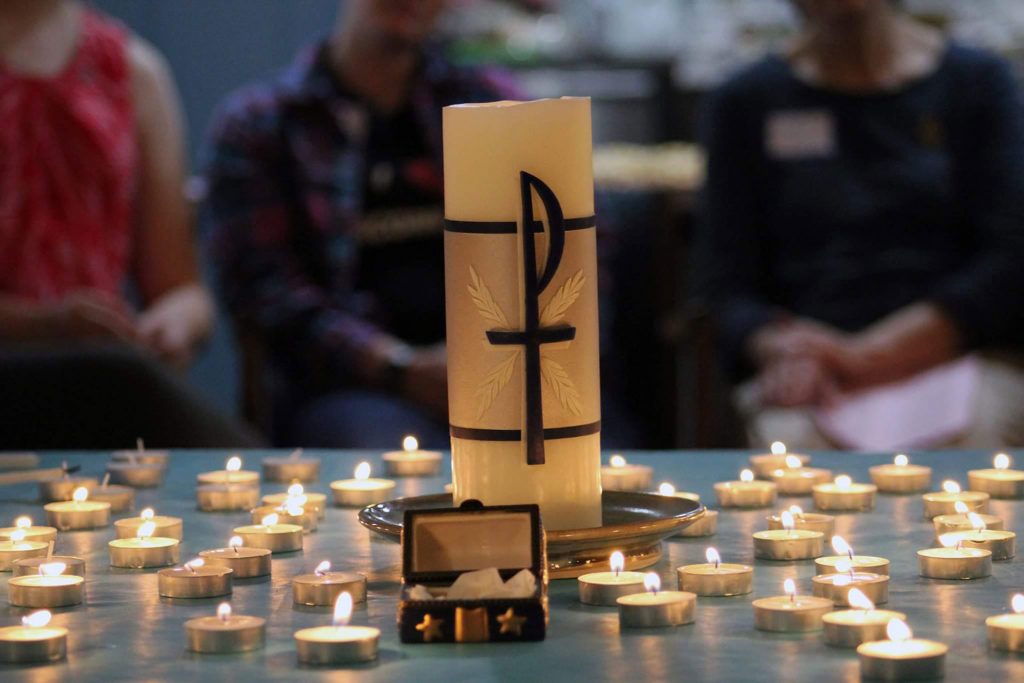
What is discernment?
Figuring out. Learning. Noticing. Taking in. Listening.
Discernment involves noticing movement toward God and away from God.
- According to St Ignatius Loyola, signs of movement toward God include excitement, anticipation, gentleness, sense of God’s presence, and peacefulness.
- Signs of movement away from God include agitation, anxiety, feeling abandoned, separation and isolation, and self-absorption.
- If you find yourself moving toward AND away, be patient and keep discerning.
- Discernment is different from decision-making. Discernment leads to decision-making, but also involves seeking God’s will in your life and work.
I Might Be Diaconal If...
Is servant ministry right for you? Start here by asking how many of these apply to you.
Education & Formation
The LDA’s Education and Formation program is unique and open to people from any Lutheran church body. Through a combination of academic requirements, hands-on ministry experiences, student seminars, and spiritual development, our students are formed in their identity as ‘one who serves,’—all in the context of intentional Christian Community. Our Diaconal Communities provide mentoring, support, prayer, and encouragement to students as they go through the program.
Frequently Asked Questions
Education and Formation takes at least two years. Because our students are varied in age, location, and career, some people take longer than two years. We like to say that formation is ‘not a race.’
No. While there ARE academic components to our program, the LDA uses a set of competencies which measure skills, values, and attitudes around ministry. Therefore, we are more concerned with diaconal identity and community commitment than academic achievement. Our program is designed to equip people for ministry in whatever setting they choose. Each setting may have its own academic requirements outside of the competencies our formation program provides. When a student completes the LDA education/formation program, they are consecrated as a member of the diaconate, and welcomed into lifelong community.
No. Our students live all over the United States, and sometimes internationally. The program is distance-based, so that students can be in formation without having to move. In addition, our program is geared for all types of service, both in the church and in secular society.
Students travel for bi-annual seminars and to attend the annual meetings of the diaconal communities.
No. However, it is possible to go through a candidacy process with your church body at the same time you are in formation with the LDA—they do not conflict.
The LDA offers an abbreviated process for already-rostered Deacons/Deaconesses who wish to deepen their call to ministry through lifelong intentional community and global connections to DOTAC (Diakonia of the Americas and the Caribbean) and Diakonia World Federation.
To apply, please email Deaconess Deb Lennox at [email protected], or call (219) 464-6925.
How to Apply
Are you interested in applying? Would you like to find out more about ministry and community? We would love to talk with you. Simply send an email to [email protected], and we will contact you and help determine your next steps.